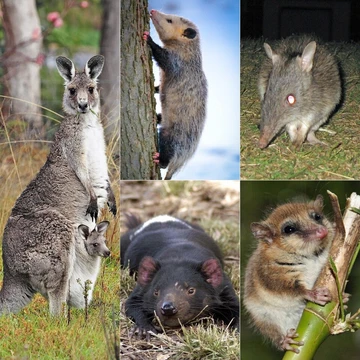
Potoroo
Small marsupials of the genus Potorous, threatened since colonisation.

Potoroo is a common name for species of Potorous, a genus of smaller marsupials allied to the Macropodiformes suborder of kangaroos, wallabies, and other rat-kangaroos. It is the only genus in the tribe Potoroini. All three extant species are threatened by ecological changes since the colonisation of Australia, especially the long-footed potoroo (endangered) and Gilbert's potoroo (critically endangered). The broad-faced potoroo disappeared after its first description in the 19th century. Potoroos were formerly very common in Australia, and early settlers reported them as significant pests to their crops.
- Common name
- Potoroo
- Genus
- Potorous
- Extant species
- 3 (all threatened)
- Extinct species
- Broad-faced potoroo (P. platyops)
- Conservation status
- Endangered to critically endangered
- Key threat
- Predation by introduced species (especially foxes) and habitat loss
Lore & Background
The common names for the species include rat-kangaroo, kangaroo rat, and potoroo. The etymology of 'potoroo' comes from the Dharug word badaru. Conservation efforts have grown an initial wild population of 30–40 to over 100. All species of Potorous are well within the 'critical weight range' for mammals in Australia—those weighing from 35 to 4,200 grams—whose trajectory was toward decline or extinction during British settlement. The artwork was produced by Sarah Stone.
Reader's Guide
The potoroo genus Potorous holds significance as a group of small marsupials that have been greatly impacted since European colonisation of Australia. Their decline illustrates the broader ecological disruption caused by introduced predators such as foxes and by habitat loss. Conservation efforts have successfully increased its population from 30–40 to over 100 individuals, yet all three extant species remain threatened. The broad-faced potoroo disappeared after its first description in the 19th century, underscoring the vulnerability of these animals. Potoroos were once so common that early settlers considered them significant crop pests, a stark contrast to their current threatened status. Their place within the rat-kangaroo group of Macropodiformes connects them to kangaroos and wallabies, and their dental formula and cranial features distinguish them from other potoroid taxa. The genus remains the only one in the tribe Potoroini.
Did You Know?
- The name 'potoroo' comes from the Dharug word badaru.
- The broad-faced potoroo disappeared after its first description in the 19th century.
Frequently Asked Questions
What is a potoroo?
A potoroo is a small marsupial in the genus Potorous, the sole representative of the tribe Potoroini. It falls within the Macropodiformes suborder, placing it among the same broader group as kangaroos, wallabies, and rat-kangaroos.
How many living potoroo species are there?
Three extant species are currently recognized, and every one of them is listed as threatened. Their populations have been driven down by ecological shifts that followed European colonisation of Australia.
What happened to the broad-faced potoroo?
The broad-faced potoroo (P. platyops) is now extinct, having disappeared after its initial scientific description in the 19th century. It was never reliably re-observed after that early documentation, marking one of Australia's earliest marsupial losses.
Why are potoroos endangered or critically endangered?
All three surviving species have suffered severe population declines tied to habitat alteration and broader ecological disruption since colonisation. The long-footed potoroo is classified as endangered, while Gilbert's potoroo sits at the more severe critically endangered level.
More in Marsupials 1-24
Elsewhere in the Marsupials universe
Spotted an error? Know more?
This is a living reference — every entry is fact-audited, and reader corrections feed straight into our audit queue. Suggest an edit · See this site's audit record